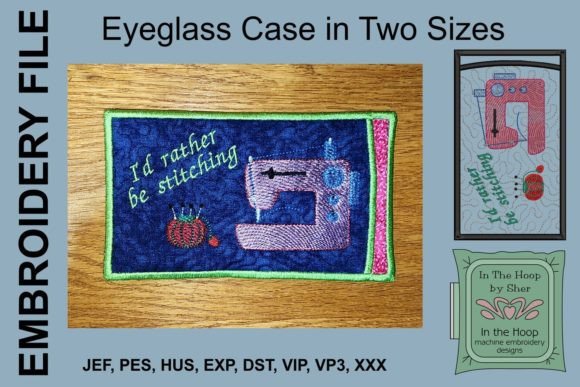
Sewing Machine Eyeglasses Case Review
As an embroidery designer who spends countless hours digitizing patterns and testing stitch placements, I approach every new embroidery file with a critical eye. My goal is never just to create something that looks good on a hoop, but to identify designs that hold commercial value for small business owners, Etsy sellers, and merch creators. Today, I am reviewing the Sewing Machine Eyeglasses Case. This is an IN THE HOOP MACHINE EMBROIDERY DESIGN intended to create a functional eyeglass case or holder featuring sewing machine-themed aesthetics. While the primary function is storage, my review focuses on its potential as a branded asset for uniforms, patches, and product packaging.
First Impressions: Visual Personality and Brand Fit
The title alone suggests a blend of utility and nostalgia. For brands in the crafting, textile, or creative studio sectors, this design immediately signals a handmade, artisanal vibe. It feels friendly, playful, yet undeniably professional. The concept of a sewing machine is universally recognized within the craft community, making it an excellent choice for establishing immediate brand recognition among target audiences who value craftsmanship.
From a design perspective, the Sewing Machine Eyeglasses Case likely balances bold shapes with intricate details typical of mechanical imagery. This duality is crucial for small business merchandise. It is not merely decorative; it serves as a visual shorthand for quality and attention to detail. When evaluating this for brand identity, one must consider if the aesthetic aligns with their current design assets. Does it fit a rustic, vintage-inspired boutique? Absolutely. Would it work for a sleek, modern tech startup? Probably not. Its strength lies in its connection to the tactile world of fabric and thread.
Real-World Business Applications
The true test of any machine embroidery design is its versatility across different mediums. Here is how the Sewing Machine Eyeglasses Case can be leveraged in real business scenarios:
- Embroidered Patches: Because this is an IN THE HOOP design, it naturally creates a finished edge. This makes it ideal for creating durable embroidered patches that can be ironed or sewn onto other products. Imagine these patches applied to denim jackets, canvas tote bags, or leather journals sold by a handmade brand.
- Staff Uniforms and Aprons: For a café, bakery, or florist that wants to emphasize their "handmade" or "artisan" ethos, this design offers a unique alternative to standard logos. Placing a smaller version of this motif on the chest pocket of an apron adds a touch of personality without overwhelming the staff uniform.
- Caps and Headwear: Cap embroidery requires careful consideration of curvature and space. If the design scales well, it could serve as a distinctive back-of-cap logo or a side accent, helping brands stand out at trade shows or local markets.
- Product Packaging Accents: In the era of unboxing experiences, branded touches matter. Sewing this design onto hang tags, gift boxes, or dust bags elevates the perceived value of the finished product. It transforms a simple item into a curated experience.
- Tote Bag Design: Tote bags are ubiquitous marketing tools. A large-scale application of this design on a sturdy cotton canvas tote creates a walking billboard that resonates with the creative community.
Strategic Placement and Limitations
While the potential is high, an experienced designer knows where to exercise caution. The Sewing Machine Eyeglasses Case may contain fine lines or small text elements that do not translate well to all surfaces.
Small Patch Sizes: If you intend to use this as a tiny patch (e.g., under two inches), you must evaluate the stitch density and line thickness. Fine details can merge together, resulting in a muddy appearance. Always downsize your digital mockup to see if the core message remains legible.
Curved Surfaces: Applying this to caps or curved bag handles requires precise hooping techniques. If the design relies on straight, flat geometry, distorting it over a curve might compromise its integrity. Test on a scrap piece of similar material first.
Dark Uniforms and Fabric Texture: The contrast between your thread colors and the base fabric is paramount. On dark uniforms, lighter threads may require additional padding or a backing stabilizer to pop. Similarly, highly textured fabrics like heavy wool or loose-weave linen can distort the precision of the embroidery, so choose smooth, stable materials for the best result.
Impact on Customer Trust and Professionalism
High-quality embroidery conveys permanence and care. Unlike printed graphics that may crack or fade, embroidered designs suggest durability. When customers see the Sewing Machine Eyeglasses Case executed cleanly on a product, it subconsciously communicates that the brand pays attention to detail. This enhances customer trust and reinforces a professional image. It signals that the business invests in premium finishes, which can justify higher price points for small business merch.
Practical Designer Notes for Production
Before committing to a production run, follow these essential steps to ensure success:
- Test in Black and White: Convert the design to monochrome to check the balance of positive and negative space. This helps identify areas that might look too cluttered or too sparse.
- Check Hoop Size: Confirm that the hoop size required for the IN THE HOOP construction fits your equipment. Ensure there is enough clearance for the needle to move freely without hitting the hoop edges.
- Review Thread Color Contrast: Select thread colors that provide sufficient contrast against your chosen fabric. Avoid subtle color shifts that might get lost in low light.
- Inspect Spacing and Density: Look closely at the digitization. Are there overlapping stitches that could cause puckering? Is the spacing logical for the eye to follow?
- Test on Real Fabric: Never assume a design will perform on paper as it does on fabric. Run a test sample on the actual material you plan to use, including the appropriate stabilizer (cut-away for stretchy fabrics, tear-away for wovens).
- Create a Printable Mockup: Use a printable mockup to visualize the design on various products before manufacturing. This aids in client approval and marketing planning.
- Confirm Commercial Licensing: Most importantly, verify the licensing terms of the digital embroidery file. Ensure you have the right to use the Sewing Machine Eyeglasses Case for commercial purposes, such as selling items made from it. Do not assume inclusion; always read the fine print.
Final Verdict
The Sewing Machine Eyeglasses Case is more than just a pattern for storing spectacles; it is a versatile tool for brand building. Its charming, industry-specific appeal makes it a standout choice for crafters, boutique owners, and creative studios looking to add a personal touch to their custom apparel and accessories. By understanding its strengths in patch creation and uniform detailing, while respecting its limitations in small-scale application, designers can leverage this IN THE HOOP design to create cohesive, professional, and engaging merchandise. Whether used as a standalone product or a subtle accent on a larger collection, it adds a layer of authenticity that resonates deeply with today’s conscious consumer.